What determines whether your floor can support an antique bath?
Several factors influence whether an upstairs floor can safely support a heavy cast iron bath.
1. The age of the property
Many period homes were built using substantial timber joists that can often support significant loads. In fact, some Victorian properties were originally designed with cast iron baths upstairs.
However, age alone doesn’t guarantee strength. Over time, timber can suffer from:
- Rot
- Woodworm
- Previous alterations
- Water damage
- Structural movement
If your property is older, it’s worth having the floor inspected before installation.
2. Joist size and span
The strength of a floor depends largely on the size, spacing, and span of the supporting joists.
Larger joists with shorter spans generally provide greater load-bearing capacity. If joists have been cut, notched, drilled excessively, or weakened by previous renovations, their strength may be reduced. Structural assessments often focus on these elements when evaluating suitability for heavy fixtures.
3. The position of the bath
Where the bath is placed can make a significant difference.
Positioning a bath close to a supporting wall often allows the weight to be distributed more effectively than placing it in the centre of a room.
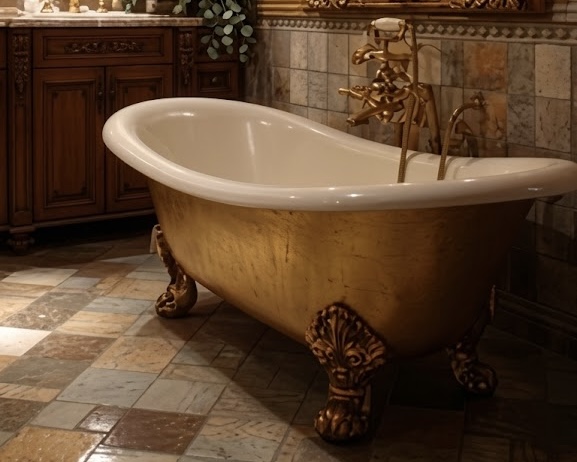
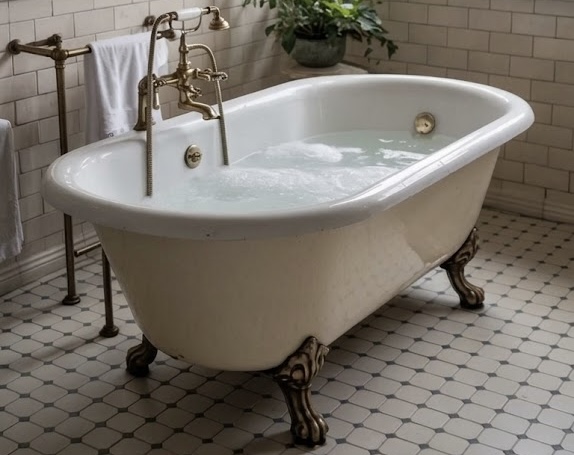
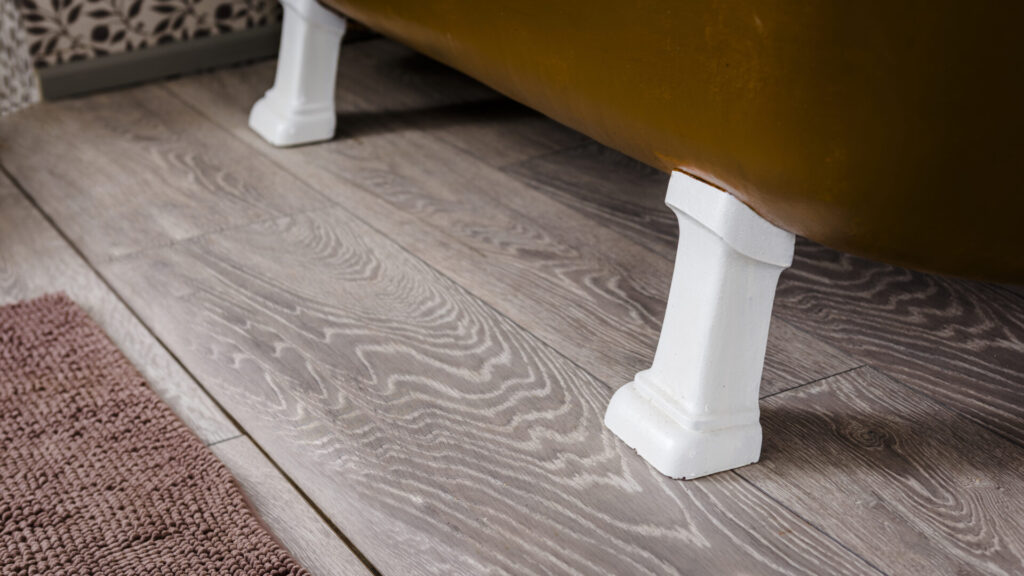
The bath’s feet also create concentrated load points, particularly on freestanding and roll-top baths. Proper installation helps spread the load safely across the floor structure.
4. Additional bathroom fixtures
When assessing floor loading, it’s important to consider the entire room.
Heavy materials such as:
- Stone flooring
- Porcelain tiles
- Marble surfaces
- Large vanity units
These features can all add significant weight to the floor structure. Bathrooms often experience higher concentrated loads than many other rooms within a property.