Edwardian Bathroom Colour Schemes That Actually Work

Spend five minutes on Pinterest and you’ll see every shade imaginable labelled as an “Edwardian bathroom colour.” Deep black walls, emerald everything, bright navy panelling. Much of it looks dramatic in a photo, but very little reflects the elegant restraint that made Edwardian interiors so enduring.

The Edwardian era (1901–1910) sat between the darker richness of the Victorian period and the cleaner, lighter aesthetic that would define early modern design. Bathrooms became brighter, more hygienic in appearance, and noticeably less cluttered. White sanitaryware, geometric tiles, polished metals and soft, natural colours were the hallmarks of the period.

If you’re designing a bathroom around an original reclaimed cast iron bath, these are the colour schemes that genuinely work in real homes and continue to look beautiful long after trends have moved on.
The secret: start with the bath, not the paint chart

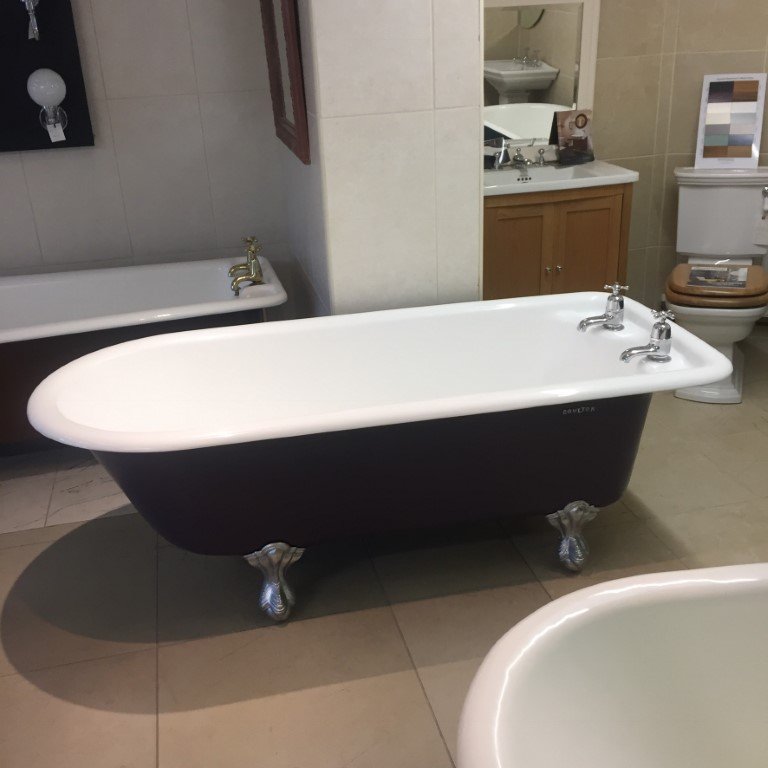
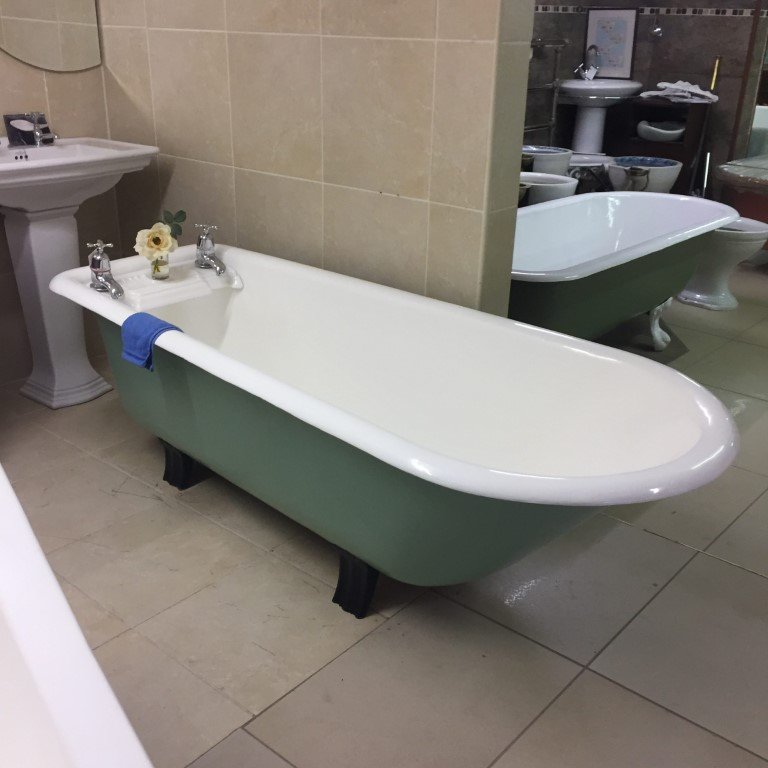
One of the biggest mistakes homeowners make is choosing wall colours first. In an Edwardian bathroom, the bath is the visual anchor.

A reclaimed roll top bath has a white enamel interior that acts as a constant reference point. The surrounding colours should enhance that enamel rather than compete with it.

If you’re still selecting a bath, browse our reclaimed baths collection first. The shape, feet finish and exterior colour will influence every other design decision.

1. Sage Green + Warm White: the safest “designer” choice

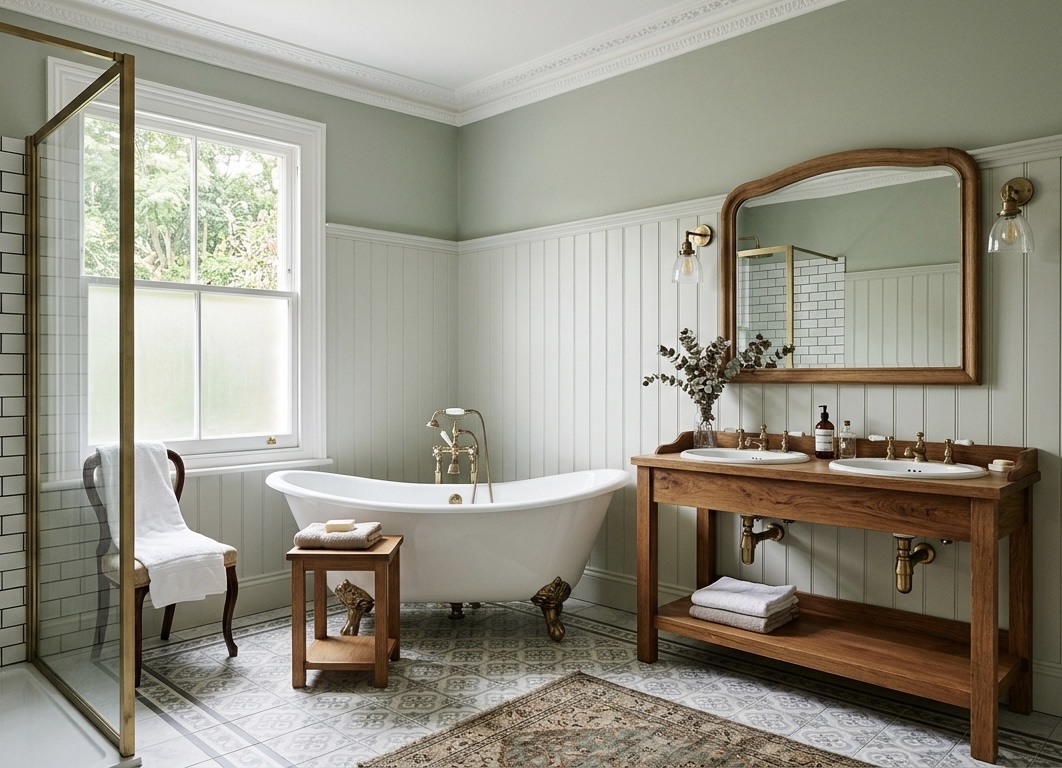
This is the scheme recommended to almost anyone renovating a period property.

Why it works

Sage has enough pigment to feel characterful, but it remains muted and natural. Against a white enamel bath, it creates contrast without making the room feel smaller.

Your formula

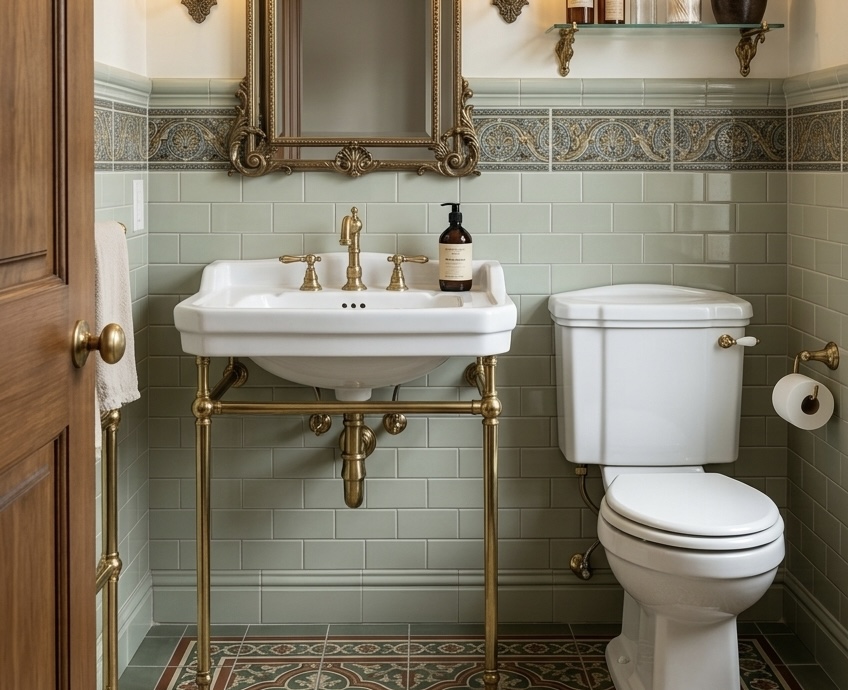
Walls: soft sage

Woodwork: warm white or ivory

Bath exterior: off-white, stone, or a slightly deeper sage

Metals: aged brass

Best for

  • Edwardian terraces
  • Country homes
  • Bathrooms with limited natural light

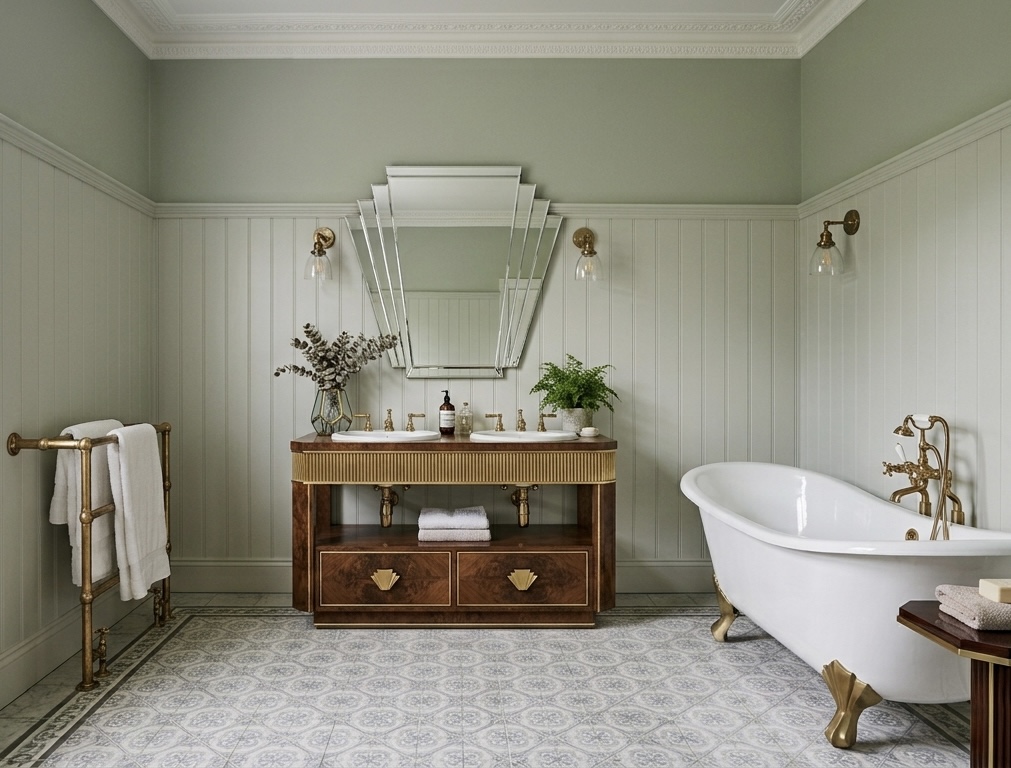
This palette pairs beautifully with a double ended reclaimed bath, allowing the bath to remain the focal point while the room feels calm and layered.

edwardian style modern bathroom with white and sage colour scheme
Edwardian style modern bathroom in white and sage
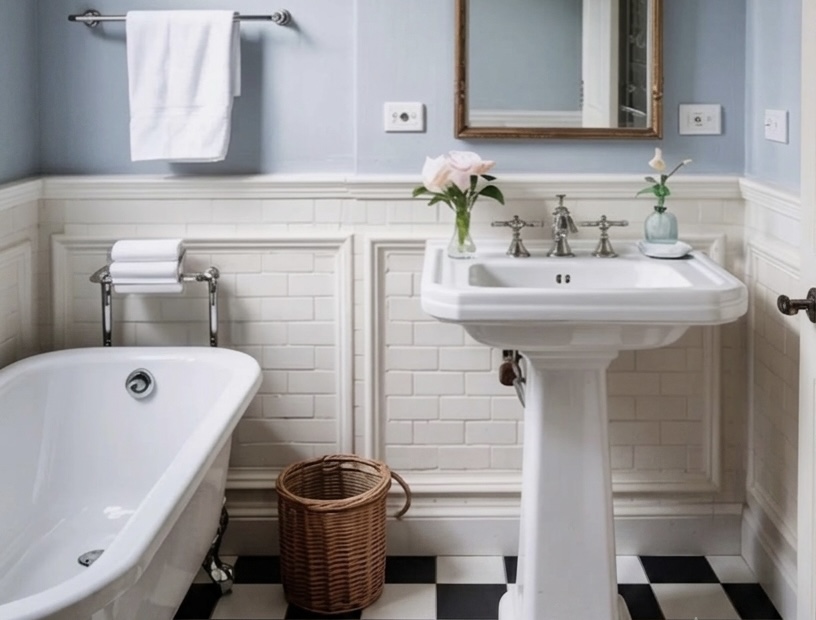
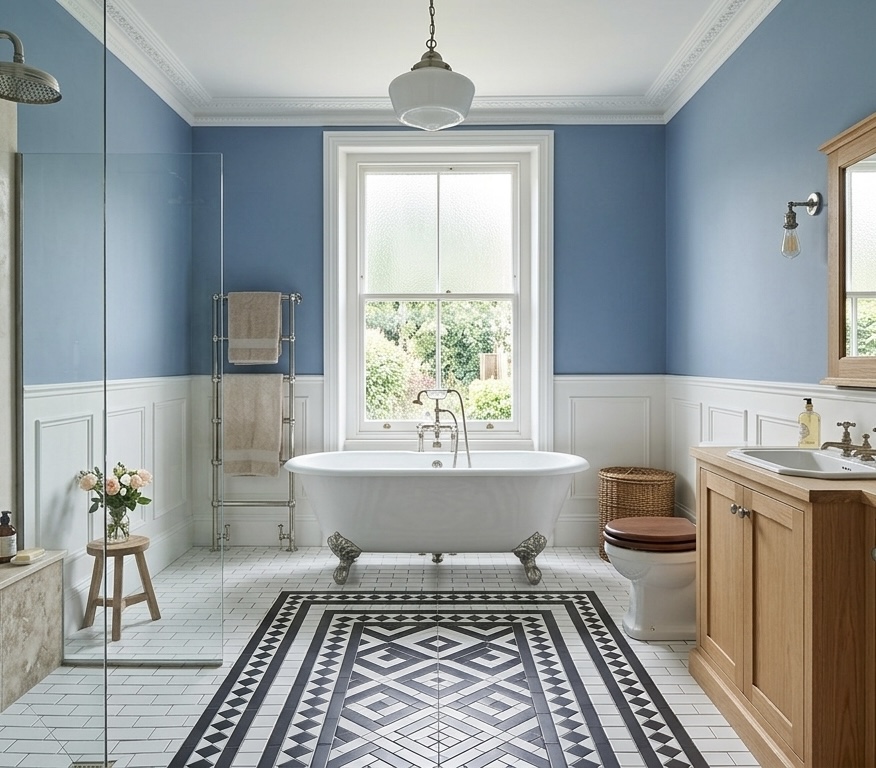
Edwardian theme bathroom with powder blue walls
powder blue edwardian theme bathroom

2. Powder Blue + Polished Nickel: classic Edwardian elegance

If you want the bathroom to feel unmistakably Edwardian, this is the closest to period authenticity.

Early 20th-century bathrooms often used pale blues because they were associated with cleanliness and fresh air.

Your formula

Walls: powder blue

Ceiling: soft white

Tiles: white metro + black geometric floor

Metals: polished nickel or chrome

Why it feels expensive

The coolness of the blue is balanced by the warmth of the cast iron bath’s painted exterior and the texture of traditional materials.

If you’re wondering if your traditional antique bath will work with your modern day plumbing, check out our guide that answers this question!

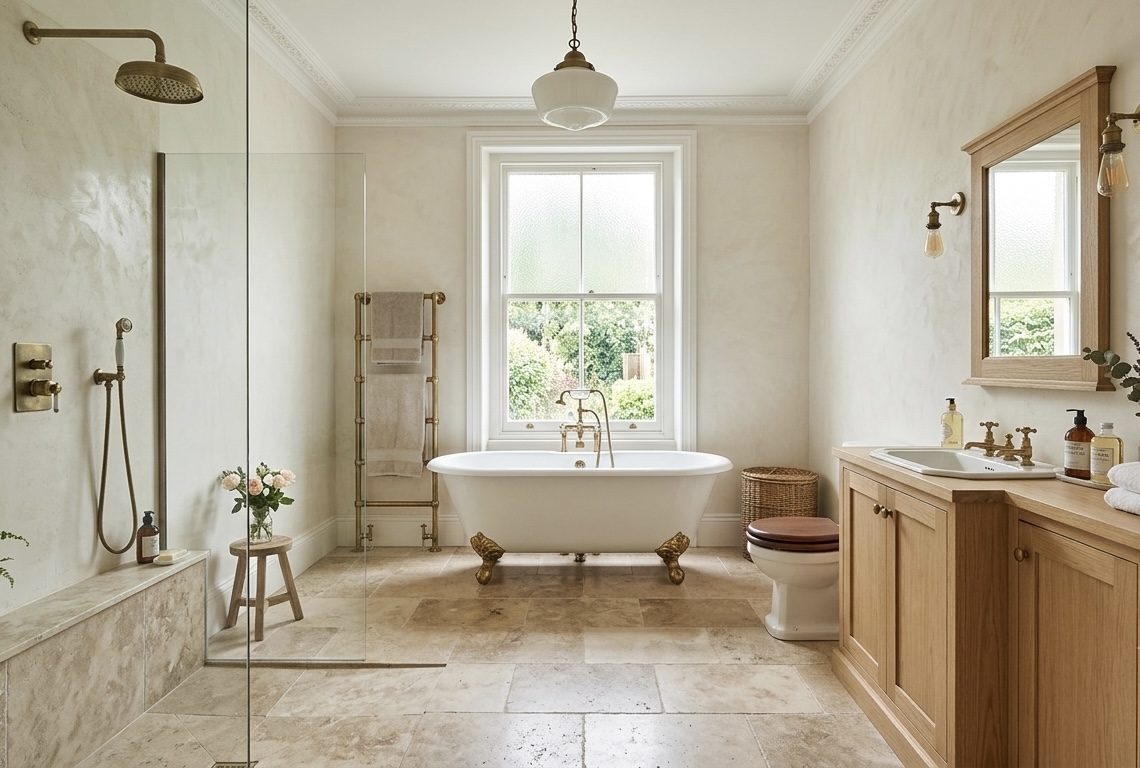
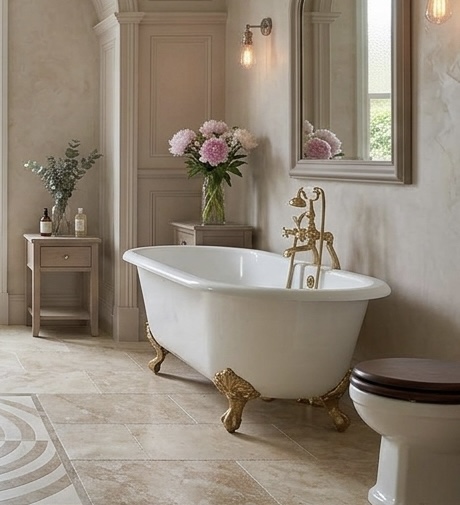
3. Warm Ivory + Stone: the timeless neutral

Neutral bathrooms are often dismissed as “safe,” but the right neutral palette is arguably the most authentic Edwardian approach.

The key difference

Avoid stark brilliant white. Edwardian interiors were softened by natural light, lime plaster, marble, and aged paint finishes.

Use these tones

  • Ivory
  • Chalk
  • Putty
  • Soft limestone
  • Pale taupe

Add depth with materials

  • Tumbled marble
  • Limestone flooring
  • Painted timber
  • Cast iron bath feet in brass or nickel

This scheme is ideal if you’re investing in a statement reclaimed bath and want the craftsmanship to take centre stage.

warm and ivory themed edwardian style bathroom
edwardian style bathroom with taupe colour pallet
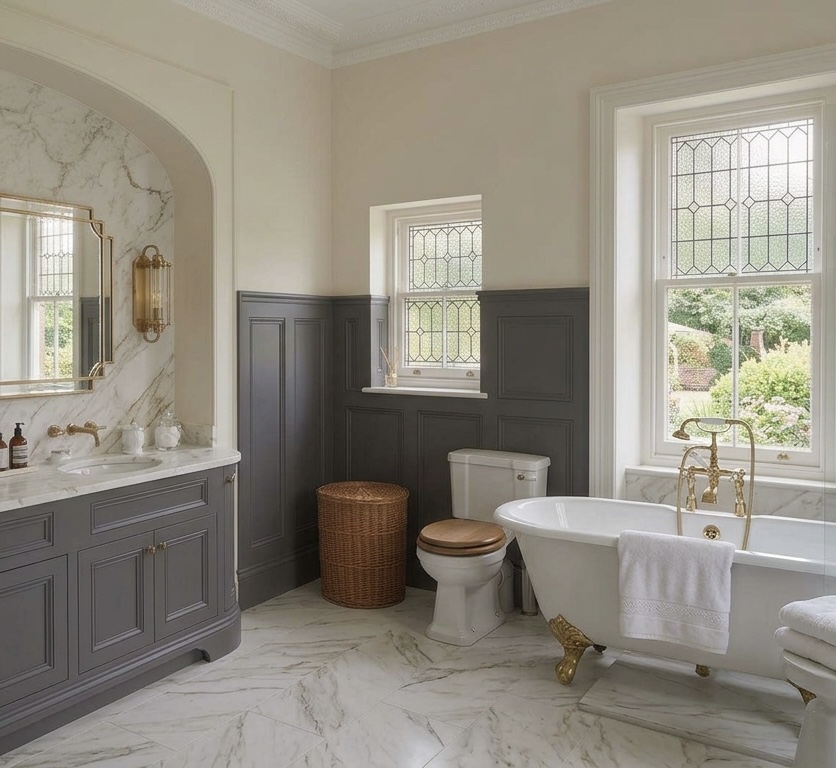
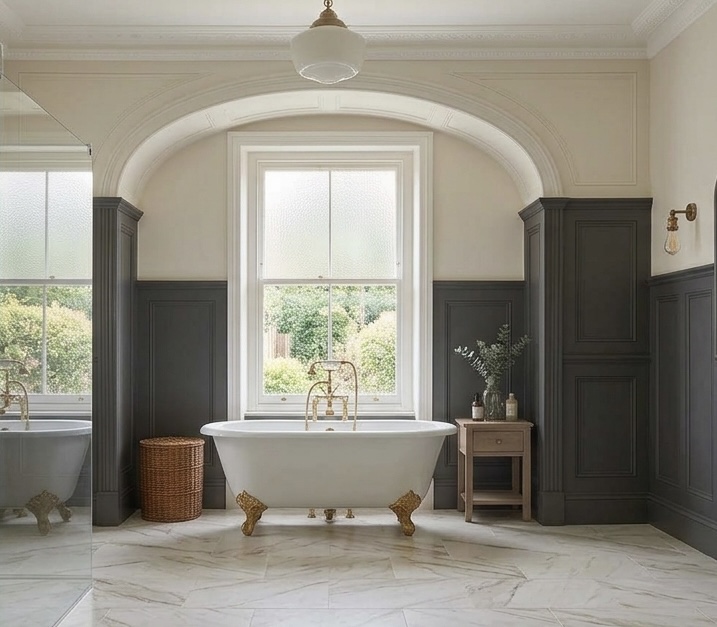
charcoal and cream edwardian theme bathroom
Edwardian style bathroom in charcoal cream colour pallete

4. Charcoal + Cream: for larger bathrooms with architectural detail

Dark colours can work in an Edwardian bathroom, but only when they’re used with restraint.

The rule

Keep the upper half of the room light.

A successful approach is:

  • Charcoal on lower walls or panelling
  • Cream above the dado line
  • White sanitaryware
  • Warm brass accents

Why this succeeds where all-black fails

The cream reflects light and preserves the airy Edwardian character, while the charcoal adds sophistication and highlights architectural features.

Colour schemes to avoid

Not every popular Instagram palette translates well to a period bathroom.

Usually problematic

  • Jet black walls + black fittings

This can sometimes feel too contemporary and visually heavy if you’re wanting a traditional antique feel.

  • Bright emerald everywhere

This can occasionally overwhelm the white enamel bath. Emerald accents work great in period style bathrooms, instead of using this as the sole colour, think about maybe adding it in to your tiles or bathroom accessories. 

  • Cool grey + chrome only  

Monochrome can work well in some bathrooms, but it can often make the bathroom feel builder-grade. If you’re trying to immediate a classic period bathroom, try adding in different shades and tones.

  • Pure white everything

All white bathrooms lose the warmth that makes antique bathrooms inviting. The warmth is an important feature that should not be overlooked when styling the finishing touches. Simple additions of small splashes of colour make all the difference.

How to choose the right scheme for your property

  • Edwardian terrace

Best: Sage + Warm White

Terraced houses often have narrower bathrooms and less natural light. Sage keeps the space feeling open while adding character.

  • Period cottage

Best: Warm Ivory + Stone

This complements exposed beams, timber floors and other heritage features.

  • Grand townhouse

Best: Powder Blue + Nickel

The cooler palette enhances high ceilings, large windows and decorative mouldings.

  • Contemporary home with period influence

Best: Charcoal + Cream

This creates a bridge between modern architecture and antique fixtures.

A designer’s shortcut: the “60-30-10” Edwardian formula

For a bathroom that looks professionally designed, the 60-30-10 Edwardian colour formula is a great starting point.

60% Base

Ivory, warm white, chalk, or pale stone

30% Secondary

Sage, powder blue, taupe, or charcoal

10% Accent

Aged brass, nickel, black tile lines, or timber


This balance keeps the room visually calm while still allowing the bath to command attention.


Antique toilet and basin

The Edwardian palette that never dates

After restoring and styling countless period bathrooms, the scheme that consistently satisfies homeowners five years later is sage green, warm white, and aged brass around an original reclaimed cast iron bath.

It captures everything the Edwardian era did well: light, elegance, craftsmanship, and quiet confidence.

And unlike many trend-driven bathroom colours, it doesn’t need replacing when the next Pinterest craze arrives.